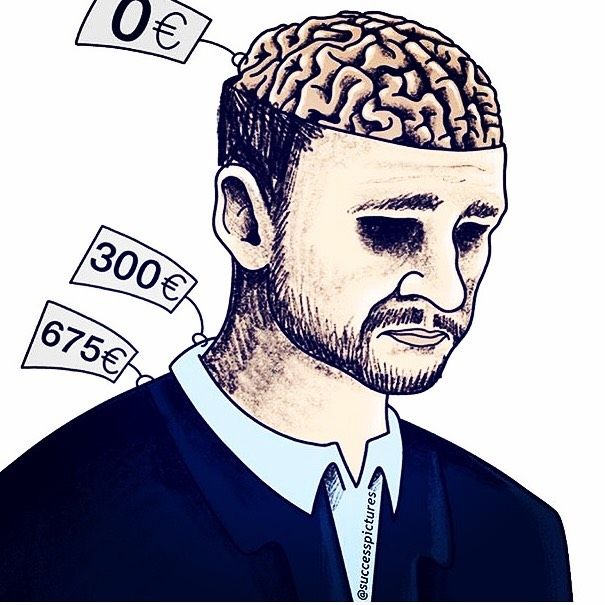
There has been plenty of research and articles on how kids or impoverished are enslaved for the profits of global corporations and the enrichment of the wealthy to feed the industrial civilization. There has been also a good look into how employers exploit their employees by diminishing their value to a single economic activity and to a unit of cheapest labor. A good number of articles have talked about how much we’re addicted to shopping and items that we throw away or stop using when they bore us. However, there has been little exploration into how the values of our ‘fast food society’ are intervened in the relationship with our family, friends, or any other human being.
Let us first define what a ‘fast food society’ is. In today’s era of technological advancements, people want to get results right away as the environment of convenience and instant transactions reinforce such expectations. Just like you get fast food ordered online, finger paid using your phone, and delivered to your home in a matter of minutes. The same goes for the convenience of ALL INCLUDED vacation packages so you don’t really need to do any extra work before you travel, you just pay.
Social media is probably the most profound example of how our ‘fast food values’ are reinforced without us realizing that. As you scroll down, you get immediate results of who or what you’re interested in. Even though the results are getting farther and farther from your interest match, your brain can’t figure it out; as long as it can build associations it will keep up with the addiction. On social media, you get the information immediately by tapping your finger and if the video or photo doesn’t load for a few seconds, you may try a couple of times more and give up on it, sounds familiar? Now, let’s entertain our brain and imagine that video or photo is actually a human being. It’s not easy to imagine so, is it? Let me draw the link in between to ease the challenge.
From our day-to-day interactions with our boss, supervisors, or managers, we realize that they are less or more likely to be satisfied with our work mainly depending on the two conditions: our work is done well and it’s done on time. It’s mostly because your boss, supervisor, or manager needs to extract economic value from you to make a quick profit for the company or institution you’re working for. And so for any kind of job, not only the quality but also a deadline or speed is essential.
What if you volunteer to help your family, friends, or community who are themselves involved in helping others without the time pressure? Ah, sounds so sweet, doesn’t it? You think, there aren’t any monetary values involved, there’s no deadline, no standards for your work’s quality as reassured with the community you offered your help to. After you spend half of your day on the project, you present it as a tool that could help the community grow bigger. However, you run into a technical problem that needs a few minutes to get resolved which means your work isn’t accessible immediately. Remember the example with the video or photo which won’t load instantly? In a ‘fast food’ society, if you don’t provide a thing right away, you don’t meet people’s expectations thus your work’s value is quickly eroded. If your work has a low value, you, as a person, have a little value even if your previous commitment was appreciated by the community. Moreover, people tend to remember negative events more than positive ones. So you realize that you have missed the point that ‘fast food society’ values the speed above the quality. You fall behind ‘fast food values’ as you are still the one who would wait until a video of a higher resolution containing hours of somebody’s voluntary work and passion uploads or downloads.
You also fall behind the dominant social paradigm, as you are still the one who would ask the committed person for further help to change the video to meet the needs (speed is above quality) of your community. The latter has more to do with the degradation of human to human communication such as the ability to express your needs. Yes, you’ve read it correctly: ‘the ability to express your needs’; nowadays we have to learn how to express our needs. Though, it’s the next discussion.
P.S. In this piece, I don’t intend to diminish the value of technology or social media to the convenience of our social interactions. I’m using a laptop to write this article which wouldn’t probably be reaching you without its existence. What I’m trying to do with the real-life situations described above is having you to think of ‘fast food values’ invasion into our most genuine human interactions: friends, family, communities, etc.
Written by Irina Le
 Earthetics
I think this is something of a vicious cycle; industrial society is built to accommodate human emotional dysfunction and ends up exacerbating it.
I remember growing up that my mother had little patience to teach me how to help out in the home, or to even tolerate me as I made a mess of things while trying to help. She would say “it’d be quicker to do it myself” and “if you can’t do it all by yourself and let me rest then I might as well do it myself”
The thing is, in this culture that values efficiency to an obsessive degree, people have no patience for slow and sloppy work. So instead of lowering their standards and learning to be patient, they come up with even more efficient ways to do the work, ultimately reducing further their patience and driving up their insane standards of efficiency.
Scientific Management (Taylorism) is a famous symbol for this spiralling addiction for efficiency. Everything is linked, and everything we don’t heal goes on to create an even more toxic culture.
LikeLike